Celebrating Down Syndrome Awareness Month in Naperville: A Community Where Everyone Belongs

Celebrating Down Syndrome Awareness Month in Naperville: A Community Where Everyone Belongs

October is Down Syndrome Awareness Month, a time to celebrate the talents, accomplishments, personalities, and contributions of people with Down syndrome—and to remind ourselves that every person deserves opportunities to belong, participate, grow, and thrive in their community.

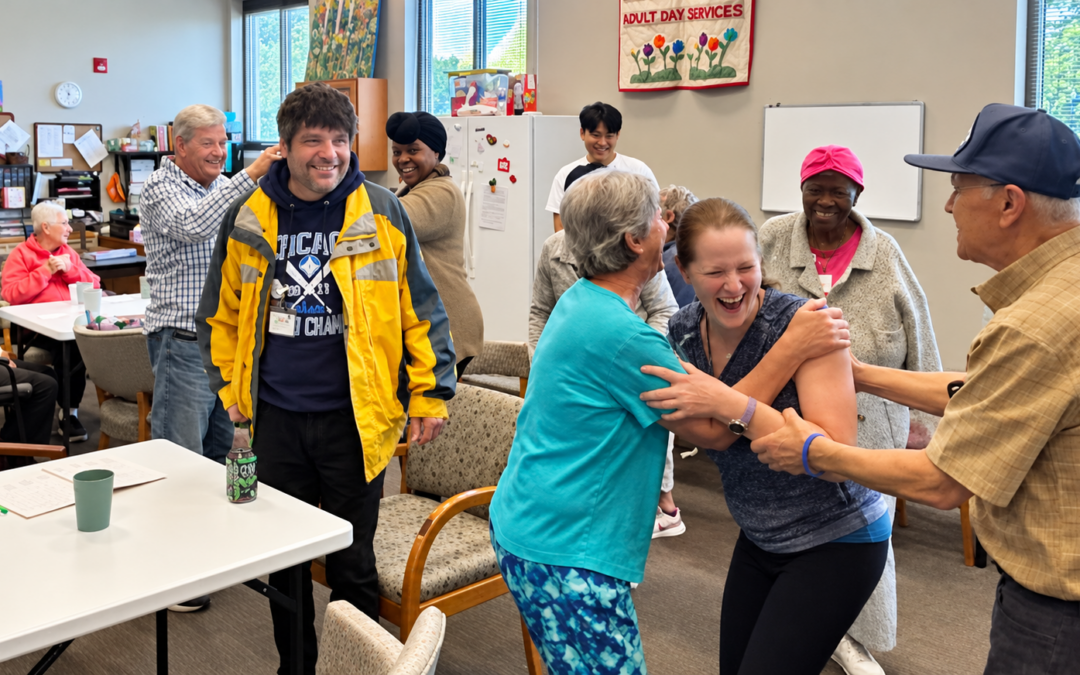
Here in Naperville, celebrating Down Syndrome Awareness Month can mean more than raising awareness. It can mean creating a community where adults with Down syndrome and other intellectual and developmental disabilities have meaningful places to go, friendships to build, new things to learn, and opportunities to be active and engaged.

At Riverwalk Recreational Services, that sense of belonging is at the heart of what we do.

Life Changes After School—But the Need for Connection Doesn’t

For children and young adults with intellectual disabilities, school provides more than an education. It provides structure, activities, friendships, social interaction, and a sense of community.

But what happens when school ends?

For many families, finding meaningful daytime opportunities for their adult son or daughter can become a challenge. Adults with intellectual disabilities still need what all of us need: friendship, purpose, activity, independence, and a place where they feel they belong.

That’s where community-based programs can make an important difference.

More Than a Day Program

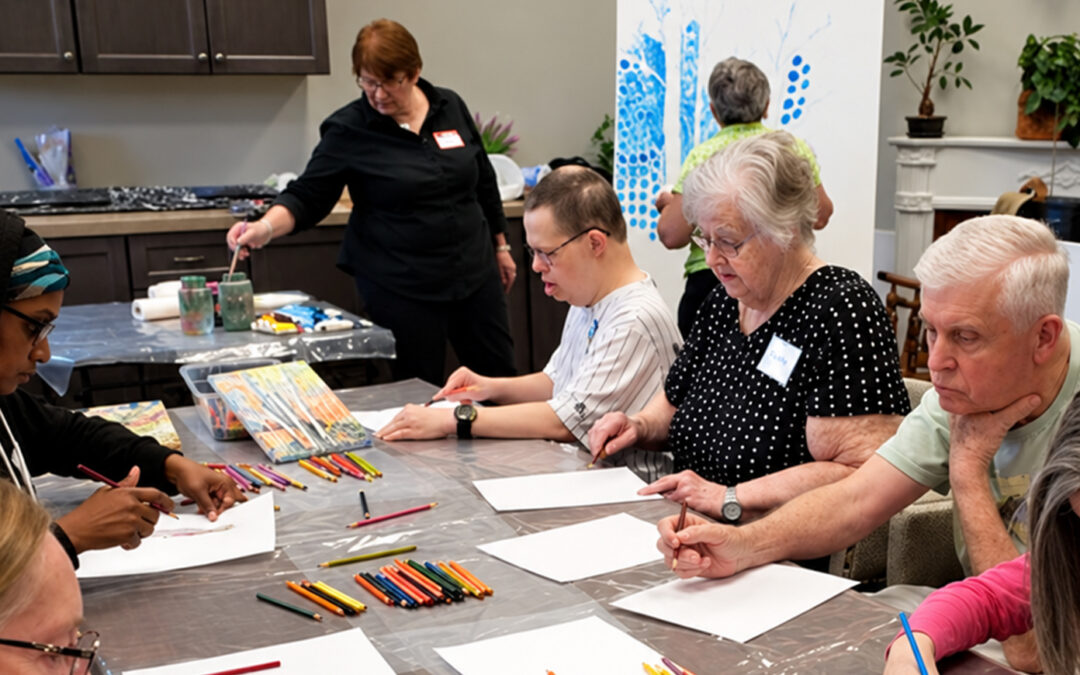
Riverwalk Recreational Services serves adults ages 18–59 with intellectual and developmental disabilities in a welcoming, small-group environment.

Our goal isn’t simply to fill the day. It’s to make the day meaningful and fun.

Participants have opportunities to:

  • Build friendships and strengthen social skills
  • Participate in exercise and recreational activities
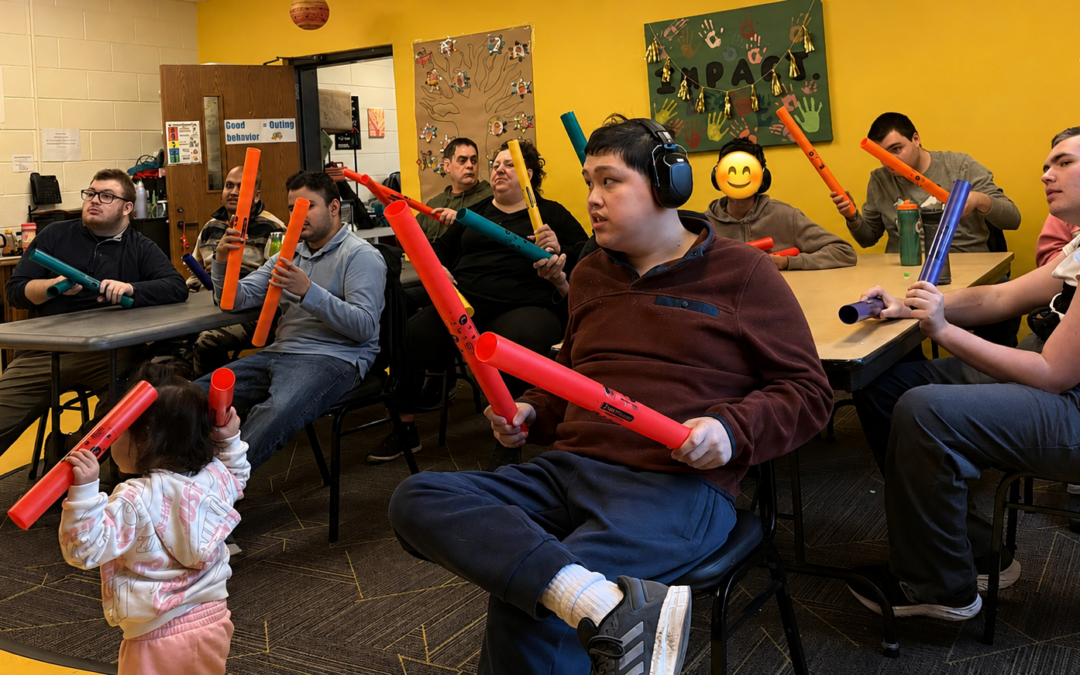
  • Enjoy music, arts and crafts, games, and enrichment
  • Develop and practice everyday life skills
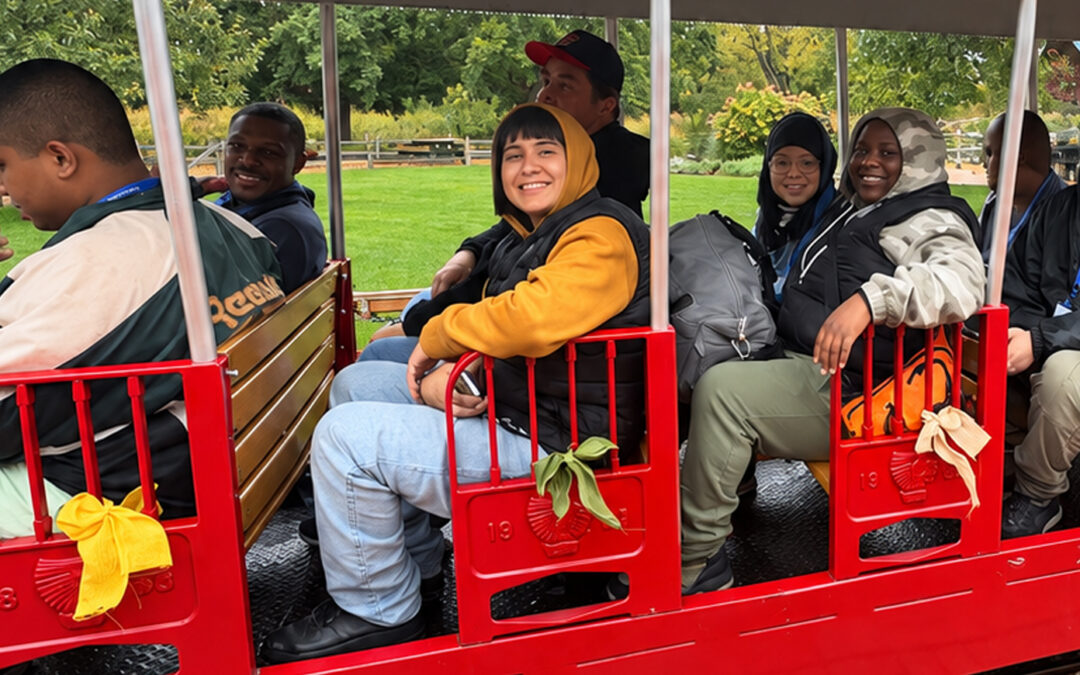
  • Participate in community outings and experiences
  • Explore new interests and build confidence
  • Experience greater independence and a sense of purpose

Our small-group approach, with approximately a 1:6 staff-to-participant ratio, helps our team get to know each participant as an individual—their interests, strengths, personalities, and goals.

Celebrating Abilities

Down Syndrome Awareness Month is an opportunity to shift the conversation from what someone can’t do to what they can do when given opportunity, encouragement, and support.

Adults with Down syndrome and other intellectual disabilities have talents to share, friendships to offer, goals to pursue, and important roles to play in our community.

Sometimes the most powerful form of inclusion is also the simplest:

Invite someone in.
Give them an opportunity.
Get to know them.
Let them contribute.
Make sure they belong.

At Riverwalk, we see every day how people thrive when they have opportunities to participate rather than simply observe.

Supporting Families, Too

A quality recreational day program can also make a meaningful difference for families and caregivers.

Knowing that a loved one is spending the day in a safe, supportive environment—building friendships, staying active, learning, laughing, and participating in the community—can provide families with both reassurance and valuable time to work, attend appointments, handle responsibilities, or simply recharge.

Supporting an adult with an intellectual disability means supporting the people who love and care for them as well.

How Naperville Can Celebrate

This October, we encourage the Naperville community to celebrate Down Syndrome Awareness Month by looking beyond awareness toward acceptance, inclusion, and participation.

Say hello. Start a conversation. Include someone in an activity. Support organizations that serve people with disabilities. Encourage businesses and community organizations to create inclusive opportunities.

Most importantly, recognize the person before the disability.

A Place to Belong and Thrive

Riverwalk Recreational Services was created in response to families seeking more meaningful daytime opportunities for adults with intellectual and developmental disabilities in our community.

We believe adulthood should continue to bring opportunities for friendship, learning, laughter, independence, and new experiences.

Because turning 18—or 22—shouldn’t mean that opportunities disappear.

And having an intellectual disability should never mean living on the sidelines of your community.

This Down Syndrome Awareness Month, let’s celebrate what becomes possible when everyone has a place at the table.

At Riverwalk Recreational Services, we’re working to create a place where adults with intellectual disabilities can belong, participate, and thrive—every day.

Learn More About Riverwalk Recreational Services

If you are looking for a daytime recreational program for an adult with an intellectual or developmental disability, we invite you to learn more, schedule a visit, and see Riverwalk Recreational Services in action.

A place to belong. A place to participate. A place to thrive.
10 Signs It May Be Time to Consider Adult Day Care for a Parent or Spouse with Dementia

10 Signs It May Be Time to Consider Adult Day Care for a Parent or Spouse with Dementia

When a parent or spouse is living with dementia, deciding when they need more support can be difficult. Changes often happen gradually, and families may find themselves continually adjusting—checking in more often, preparing meals, managing medications, or rearranging work and family schedules.

Adult day services can provide a valuable middle ground: your parent can continue living at home while spending part of the day in a safe, structured and socially engaging environment. The Alzheimer’s Association notes that adult day centers can provide people with dementia opportunities for socialization and staffed activities while also giving family caregivers time to work, rest, run errands or attend to other responsibilities. Alzheimer’s Association

Here are 10 signs that it may be time to explore adult day services.

1. Your parent/spouse is increasingly isolated.

They may rarely leave home, see friends less frequently, or spend much of the day alone watching television or sleeping.

How Riverwalk can help: Social connection is an important part of the Senior Services program. Participants spend their days interacting with others through conversation, games, music, activities and shared meals. Riverwalk Adult Day Services

2. You’re becoming uncomfortable leaving them home alone.

Perhaps you’re worried about a fall, an appliance being left on, confusion, or what would happen if an unexpected situation occurred.

How Riverwalk can help: Riverwalk provides a supervised daytime environment with trained staff, including registered nurses and activity professionals. Riverwalk Adult Day Services

3. Their days have lost structure and purpose.

Dementia can make it increasingly difficult to initiate activities independently. Without structure, days can become long and repetitive.

How Riverwalk can help: Riverwalk provides a predictable daily routine that includes socializing, chair exercise, trivia, music, lunch, walks and rotating games and activities. Activities typically change about every half hour to keep participants engaged. Riverwalk Adult Day Services

4. They need more reminders or assistance during the day.

Medication reminders, meals, hydration and other everyday needs may be becoming harder for your parent/spouse to manage independently.

How Riverwalk can help: Riverwalk’s registered nurses provide health monitoring and services that can include medication administration, blood sugar checks, oxygen treatments and other medical oversight. Riverwalk Adult Day Services

5. You notice changes in eating or drinking habits.

Your parent/spouse may forget meals, eat poorly when alone, or simply lose interest in preparing food.

How Riverwalk can help: Participants who attend during the lunch period receive lunch, along with beverages and an afternoon snack. Riverwalk Adult Day Services

6. Your parent/spouse isn’t getting enough physical or mental stimulation.

Activities they once enjoyed may have disappeared from their routine, and they may spend increasingly long periods inactive.

How Riverwalk can help: Riverwalk combines physical, cognitive and social engagement through exercise, arts and crafts, music, trivia, games, entertainment, walks and outings. Riverwalk Adult Day Services

7. You’re trying to balance caregiving with work and family responsibilities.

Phone calls, visits and appointments can gradually turn caregiving into a second full-time job.

How Riverwalk can help: Riverwalk is open Monday through Friday from 7:45 a.m. to 5:00 p.m., providing families with dependable daytime support while their loved one remains part of the community. Door-to-door transportation can also be arranged for an additional fee. Riverwalk Adult Day Services

8. You’re becoming physically or emotionally exhausted.

Caregiver fatigue can develop slowly. You may realize that you haven’t had uninterrupted time for yourself, your spouse, friends, appointments or simply rest.

How Riverwalk can help: Adult day services provide something important for the caregiver, too: respite. The Alzheimer’s Association specifically identifies having time to rest, run errands, work or complete other responsibilities as an important benefit of adult day programs. Alzheimer’s Association

9. You want your parent/spouse to remain at home as long as possible.

You may not feel that assisted living or memory care is necessary yet, but managing everything at home without additional support is becoming increasingly difficult.

How Riverwalk can help: Adult day services can supplement the care families provide at home by adding daytime supervision, socialization, activities and health monitoring. Riverwalk specifically serves adults seeking affordable day services while continuing to age at home. Riverwalk Adult Day Services

10. You’re starting to wonder, “How much longer can we keep doing this?”

That question itself can be important. Seeking additional support doesn’t necessarily mean changing where your parent lives. It may simply mean expanding the caregiving team.

You Don’t Have to Wait for a Crisis

The best time to explore adult day services may be before the family reaches a breaking point.

Riverwalk Adult Day Services has served the Naperville community since 1983. Its Senior Services program provides a safe, social and stimulating daytime environment with professional staff, nursing oversight, meaningful activities, socialization, meals and caregiver support. Riverwalk Adult Day Services

Families can begin with an intake appointment to determine whether Riverwalk is an appropriate fit. Current eligibility requirements include being able to self-toilet, transfer without assistance, be free of communicable diseases, and participate positively in a group setting. Riverwalk Adult Day Services

Sometimes the goal isn’t to do more for your parent/spouse. It’s to build the right support around both of you.

Learn more about Riverwalk Senior Services

Healthy Aging at Home: How Adult Day Programs Help Seniors Stay Independent

Healthy Aging at Home: How Adult Day Programs Help Seniors Stay Independent

How Adult Day Services Reduce Hospitalizations and Keep Older Adults Safely at Home

Older adults—especially those living with dementia or chronic health conditions—face a high risk of avoidable hospitalizations. Falls, medication errors, dehydration, infections, and sudden behavioral changes often escalate quickly when someone is isolated or lacks daytime support. Adult Day Services provide a powerful solution, offering structured care that keeps participants healthier, more stable, and more connected.

This article explains how Adult Day Centers significantly reduce hospitalizations and improve quality of life for both participants and caregivers.

🧠 Early Detection of Health Changes

Daily interaction with trained staff means subtle changes are noticed early—before they become emergencies. Staff monitor:

  • Appetite and hydration
  • Mobility and gait
  • Mood or cognitive changes
  • Signs of infection
  • Blood pressure or glucose fluctuations

Early detection allows families and healthcare providers to intervene quickly, preventing unnecessary ER visits.

💊 Medication Support Prevents Errors

Medication mistakes are one of the leading causes of preventable hospitalizations among older adults. Adult Day Centers help by:

  • Providing medication reminders
  • Ensuring doses aren’t missed
  • Monitoring for side effects
  • Communicating with families about prescription changes

Consistent oversight stabilizes chronic conditions like diabetes, hypertension, and heart disease.

🏃 Fall Prevention Through Daily Activity

Falls are a major cause of ER visits. Adult Day Services reduce fall risk through:

  • Strength and balance exercises
  • Safe, supervised movement
  • Mobility assistance
  • A secure, accessible environment

Regular activity improves confidence, coordination, and overall physical stability.

🥗 Nutritious Meals & Hydration Support

Malnutrition and dehydration often lead to hospitalization. Adult Day Centers provide:

  • Balanced meals
  • Hydration throughout the day
  • Special diet accommodations
  • Monitoring appetite changes

This is especially important for individuals with dementia, who may forget to eat or drink.

🧩 Cognitive Engagement Reduces Behavioral Crises

Isolation and boredom can trigger behaviors that lead to emergency care. Structured engagement helps:

  • Reduce agitation
  • Improve mood
  • Maintain routine
  • Prevent wandering or unsafe behaviors

Participants feel calmer, more oriented, and more connected.

👨‍👩‍👧 Caregiver Relief Prevents Crisis Situations

Caregiver burnout often leads to rushed hospital visits or emergency calls. Adult Day Services provide essential respite:

  • Allowing caregivers to work
  • Reducing stress and decision fatigue
  • Supporting long‑term caregiving stability

When caregivers are rested, they can respond more effectively to health changes.

🏥 Coordination With Healthcare Providers

Adult Day Centers often collaborate with physicians, home health agencies, and families. This coordination ensures:

  • Faster response to health changes
  • Better chronic disease management
  • Fewer unnecessary ER visits
  • Improved continuity of care

Participants benefit from a team‑based approach that keeps them stable and supported.

📉 The Bottom Line

Adult Day Services are one of the most effective community‑based supports for preventing avoidable hospitalizations. By combining supervision, engagement, health monitoring, and caregiver relief, centers help older adults remain safely at home—healthy, connected, and thriving.

Life After 22: Day Program Options for Naperville Adults with Disabilities

Life After 22: Day Program Options for Naperville Adults with Disabilities

For most families, a 22nd birthday is a milestone to celebrate. For families of a young adult with an intellectual or developmental disability, however, turning 22 can bring an entirely different emotion: uncertainty about what comes next. For years, school has provided more than education. It has offered structure, routine, social interaction, activities, transportation, familiar faces and a place to belong.

Then comes age 22.

For many Illinois students with disabilities, this milestone marks the transition out of school-based special education services. Suddenly, families who have spent years relying on a predictable weekday routine must begin answering a much harder question:

What will my son or daughter do during the day now?

When the School Bus Stops Coming

Imagine the change from the perspective of a young adult with a disability.

One week may include friends, teachers, activities, exercise and a familiar daily schedule. Then that routine changes. The people, places and activities that have been part of everyday life may no longer be there in the same way.

For parents and caregivers, the transition can be equally significant. Families may need to balance employment, other family responsibilities and caregiving while searching for an appropriate adult program.

The issue isn’t simply finding somewhere to spend the day.

Families are looking for something much more important: a place where their adult child can continue to have friendships, experiences, purpose and a sense of belonging.

Life After 22 Should Still Be a Life of Possibilities

Leaving the school system shouldn’t mean leaving behind opportunities to learn, socialize and participate in the community.

Adults with intellectual and developmental disabilities continue to benefit from meaningful routines and opportunities to:

  • Build and maintain friendships
  • Participate in recreational activities
  • Exercise and stay active
  • Explore their community
  • Develop greater independence
  • Experience music, art and other enrichment
  • Volunteer and contribute to their community
  • Discover new interests
  • Simply have fun with friends

That’s why adult day and recreational programs can become such an important part of life after 22.

The right program isn’t simply supervision. It can provide a community.

A Naperville Day Program Designed Around Connection

Riverwalk Adult Day Services has served the Naperville community since 1983. After hearing directly from parents about the need for additional options for adults with disabilities, Riverwalk launched Riverwalk Recreational Services in September 2023.

The program serves adults ages 18–59, including individuals with intellectual disabilities, Down syndrome and autism.

The goal is straightforward: create a welcoming environment where adults with disabilities can stay active, make connections, enjoy new experiences and remain engaged with the larger community.

Rather than spending the day isolated at home, participants have opportunities to be part of a group and part of their community.

What Does a Day at Riverwalk Look Like?

Riverwalk Recreational Services operates Monday through Friday from 9:30 a.m. to 2:30 p.m.

No two days have to look exactly alike.

Activities can include active games, exercise, arts and crafts, music and dance, entertainment, pet visits and other enrichment opportunities.

But some of the most meaningful experiences happen beyond the program walls.

Community outings and field trips give participants opportunities to explore, experience new places and interact with the broader community. Participants can also take part in volunteer activities with local nonprofit organizations, giving them the opportunity not just to receive support from their community, but to contribute to it.

That distinction matters.

Adults with disabilities have talents, interests and abilities to share. Meaningful volunteer experiences can reinforce an important message:

You aren’t simply part of a program. You are part of a community.

Belonging Matters at Every Age

For many families searching for a day program for an adult with disabilities, activities are only part of the decision.

They are also looking for belonging.

Will my family member make friends?

Will people know them as an individual?

Will they be encouraged to participate?

Will they have something to look forward to?

Will they come home with stories to tell?

These questions don’t disappear when someone turns 22.

At Riverwalk Recreational Services, group socialization is intentionally combined with cognitive engagement, physical activity, recreation and community experiences. The objective is to create days that are active, engaging and meaningful.

And while participants gain opportunities for connection and growth, families and caregivers gain something important as well: respite and peace of mind.

An Affordable Local Option

Cost can be another major concern when families begin exploring adult disability services.

Riverwalk Recreational Services currently costs $80 per day for its five-hour program from 9:30 a.m. to 2:30 p.m.

The fee includes beverages, an afternoon snack, activity supplies, and transportation associated with community outings and daily program activities. Participants bring their own lunch.

Monthly scheduling provides families with predictability while allowing them to plan attendance around their individual needs.

Start Planning Before the 22nd Birthday

One of the most important things families can do is begin exploring adult services before school-based services end.

Visit programs. Ask questions. Talk with other parents. Consider what environment best fits your family member’s personality, abilities and interests.

When evaluating a program, think beyond availability. Ask yourself:

Will this be a place where my family member can belong and thrive?

Look for opportunities for socialization, recreation, exercise, community involvement and meaningful choice. Ask how participants interact with one another, how activities are selected and how the program encourages independence and participation.

Most importantly, involve the future participant in the process whenever possible.

After all, this is about building their adult life.

The 22nd Birthday Can Be a Beginning

The transition out of school can feel like a door is closing.

But it doesn’t have to be the end of structure, friendships, learning or community participation.

It can be the beginning of something new.

A young adult who once depended on school for daily social interaction can develop new friendships. Someone who enjoyed classroom activities can discover new interests through art, music, exercise or community outings. A person who has frequently been the recipient of services can experience the pride of volunteering and helping someone else.

That’s what life after 22 can look like.

The challenge facing Naperville-area families is real, and the need for additional adult day and recreational opportunities continues. Riverwalk Recreational Services was created in direct response to families asking for another community-based option.

Because every adult deserves more than somewhere to go during the day.

They deserve somewhere they belong.

Learn More About Riverwalk Recreational Services

Families interested in exploring Riverwalk Recreational Services can schedule an intake appointment to meet the team, learn about the program and determine whether Riverwalk is an appropriate fit.

Riverwalk Recreational Services
Grace United Methodist Church
300 E. Gartner Road
Naperville, Illinois 60540
Monday–Friday | 9:30 a.m.–2:30 p.m.
630-357-8166

Life after 22 should be filled with connection, purpose, friendship and possibilities.

Aging Parent needs more help in this Fall :  A Naperville family’s guide to Adult Day Care

Aging Parent needs more help in this Fall : A Naperville family’s guide to Adult Day Care

Why Fall Is When Families Notice the Change

Something shifts after Labor Day. The days get shorter, the yard work stops, the neighbors go inside, and a parent who seemed fine in July is suddenly alone in a quiet house from breakfast until dark.
Fall is the season Naperville families call us most. Usually it sounds like one of these:
• “My mom sits in front of the T.V. all day.”
• “Dad has stopped going anywhere since his friend passed.”
• “I found the stove burner on.”
• “I’m back to a full work schedule and I can’t check in three times a day anymore.”
• “She’s fine — she just can’t be alone.”

If any of that sounds familiar, you are not late and you are not failing. You are at the exact point where adult day care is designed to help.

What Adult Day Care Actually Is:
Adult day care — also called adult day services or senior day care — is structured daytime care in a community setting, typically Monday through Friday during business hours. The Illinois Department on Aging describes it as a service for older adults who want to remain in their community but who cannot be home alone during the day due to a physical, social, cognitive decline or mental impairment (Illinois Department on Aging).

A good program delivers three things at once:
1. Safety and health oversight. Registered nurses handle medication administration, blood sugar checks, oxygen treatments, and general medical monitoring.
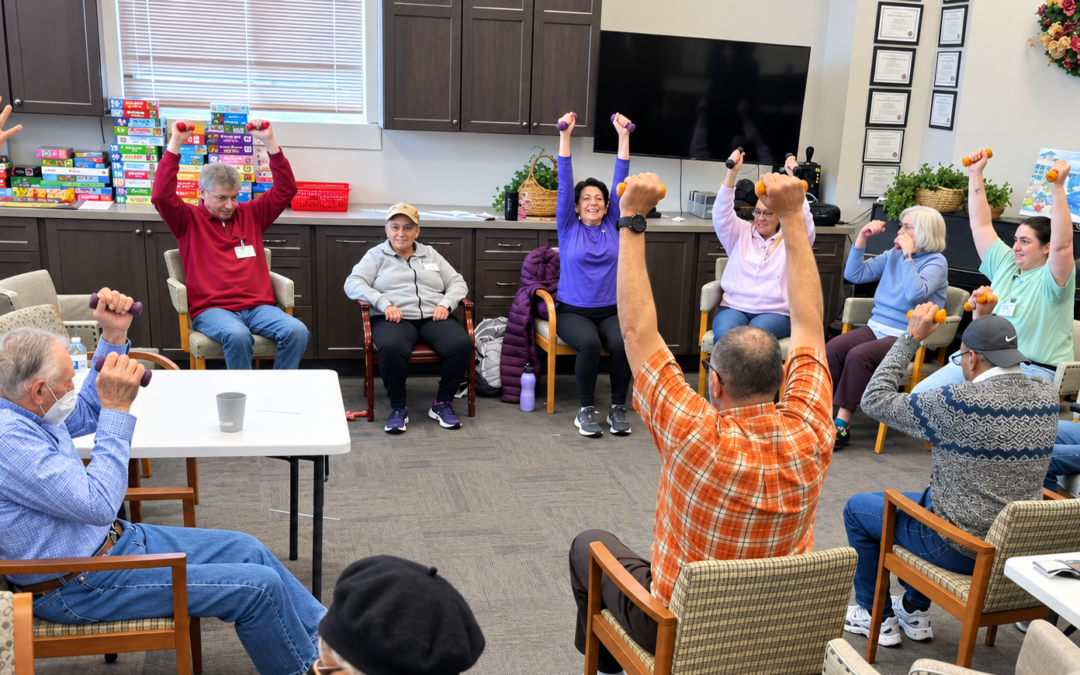
2. Engagement. At Riverwalk, activities change roughly every half hour — chair exercise, trivia, music, arts and crafts, bingo, bags, horseshoes, walks, animal visits, and outings — because a stimulated brain and a moved body both age better.
3. Respite for you. The state names this explicitly: adult day service provides respite for family caregivers, especially those employed outside the home (Illinois Department on Aging).

How it differs from other options. Consider the options below; what the option provides; when it that option most appropriate.
Option 1: Adult day care Daytime; care in a group setting with nursing, meals, activities and socialization. Most appropiate when your parent lives at home, can’t be alone during the day, and needs people and structure
Option 2: In-home caregiver; One-on-one help at home, billed hourly. When? Personal care, help at evenings, overnights, and weekends or someone who cannot tolerate a group
Option 3: Assisted living; A residential move. When? Care needs run around the clock and home is no longer workable
Option 4: Memory care; Residential, dementia-specialized. When? Advanced dementia with overnight risk.

Many Naperville families use adult day care specifically to delay a residential move — which is the point of Illinois’ community-based care model.

Is My Parent a Fit for Adult Day Care?
The Riverwalk’s Senior Services program is built for adults over 18 who can self-toilet, are free of communicable disease, and can engage positively in a group setting. Families most often enroll a loved one who:
• Is diagnosed with Alzheimer’s, another dementia, Parkinson’s, stroke recovery, diabetes, M.S. or arthritis
• Is at risk of falling or needs help with daily activities
• Uses a walker, cane, or wheelchair, or needs medication reminders
• Is isolated and losing interest in the world
• Simply cannot be left home alone safely for eight hours

What Does Adult Day Care Cost in Naperville?
This is the question every family asks first, so here it is plainly.
Riverwalk Adult Day Services (Senior Services), 305 W. Jackson Ave., Naperville:
Service Rate
Full day (more than 5 hours), 7:45 AM–5:00 PM $100 (less than $12 per hour)
Half day (up to 5 hours) $80
Drop-in care $20 per hour, 2-hour minimum with 24 hours’ notice

Included in the daily rate: a dietician-developed hot lunch for anyone present from 11:00 AM to noon, an afternoon snack, beverages all day, all activity supplies, and RN oversight. Door-to-door transportation is available for an additional fee.
For context: the national average for adult day health care is $95 per day, or about $24,700 a year at five days per week (CareScout 2025 Cost of Care Survey). Naperville’s other private adult day option publishes $155 per day (Naperville Senior Center). As a 501(c)(3) nonprofit founded in 1983, Riverwalk prices below others in the area and close to the national average.

There are several routes to potentially get assistance in paying for Adult Day services: some Medicare programs, Illinois CCP program, long-term health care, Veterans Community Care and Medicaid.

How to Enroll at Riverwalk: Four Steps
1. Schedule an intake appointment. Call 630-357-8166 or email through the Riverwalk website.
2. Complete the intake form. Submit online or download and bring it in.
3. Get medical clearance. A physician’s physical exam is required before attending, plus a TB test that shows no active TB.
4. Build the monthly attendance calendar. Full-day and half-day attendance is planned month to month, with next month’s calendar due by the 8th. Changes can be made to the schedule with advance notice. There is no long term contract.
Most families start with two or three days a week and adjust. There is no requirement to commit to five.
A Typical Day at Riverwalk
• 7:45–9:00 AM — Arrival, coffee, and conversation
• Morning — Chair exercises, trivia, music
• 11:00 AM–12:00 PM — Hot lunch developed by a dietician
• Early afternoon — A walk outdoors along the Riverwalk when weather allows
• Afternoon — Rotating active and passive games, entertainment, animal visits, arts and crafts, snack
• By 5:00 PM — Pickup or door-to-door transportation home
Activities rotate about every 30 minutes. That cadence is intentional — it matches the attention span of participants living with cognitive change and keeps the day from dragging.
Short answer: Riverwalk Adult Day care in Naperville is a State Contracted daytime program where an older adult spends the day in a supervised, social setting with nursing oversight, meals, and activities, while the family caregiver works or rests. At Riverwalk Adult Day Services in downtown Naperville, a full day costs $100, a half day is $80, and drop-in hours are $20 per hour — with Medicaid, VA benefits, long-term care insurance, and DuPage County assistance accepted for those who qualify. Families with a dementia diagnosis may also have adult day care paid for by Medicare through the GUIDE Model, which covers up to $2,625 a year in respite with no copay. Riverwalk has served Naperville and DuPage, Will, Kane, and Kendall County families since 1983 and we look forward to helping you and your family.